

The original article was published in AdForum.
Fred Schuster, InnerGroup’s CEO and long-time pioneer in the in-housing and marketing operations space, shares his perspective on how client briefs are being redefined. He also weighs in on the rise of co-creation, the impact of real-time data, and how in-house teams are quietly leading the way.
How are client briefs evolving in 2025, and what’s prompting that shift?
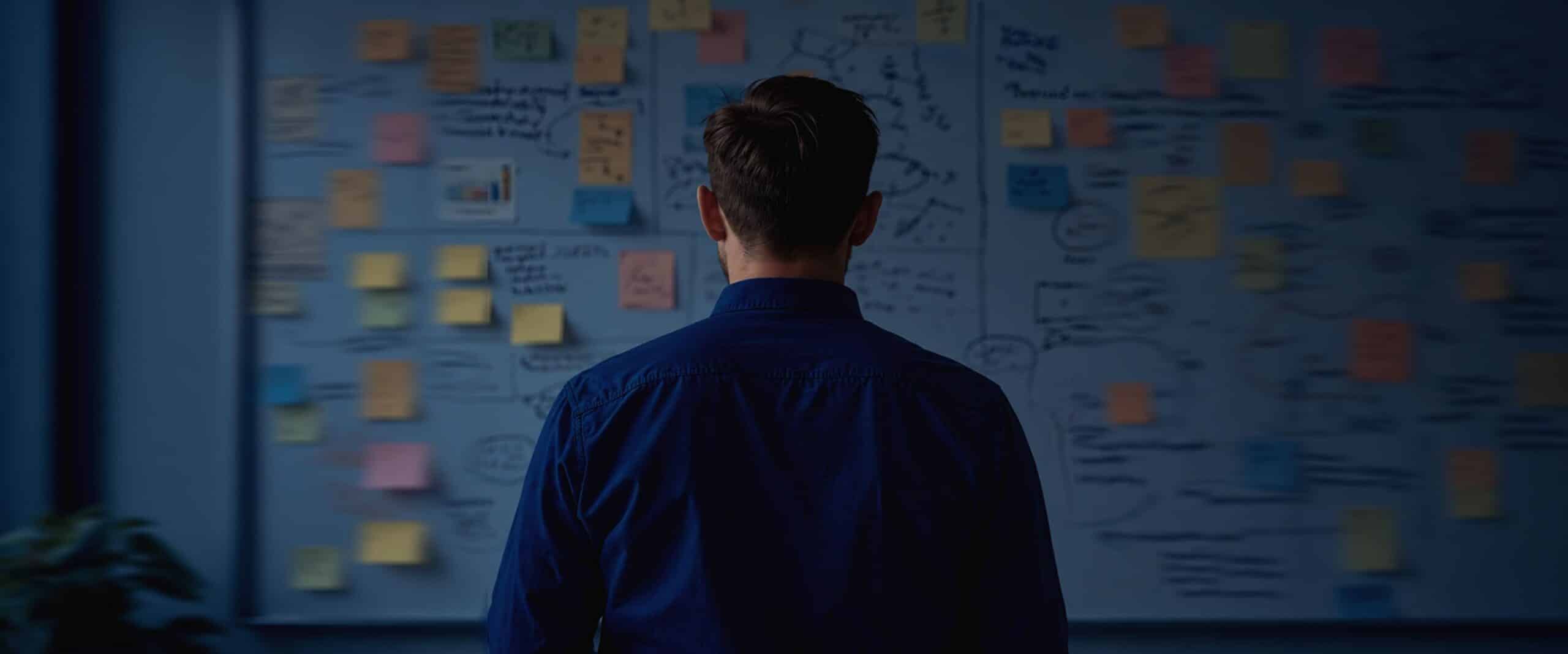
The traditional brief, the document handed off from strategy to creative has evolved and become more dynamic. In 2025, briefs are becoming dynamic systems that align teams continuously, not just at kickoff. They’re shaped in real-time, adjusted based on incoming data, and often co-authored across functions.
This change is driven by pressure for speed, transparency, and business impact. In-house teams, especially, need fewer handoffs and faster delivery. Briefing can’t just be directional anymore; it has to be operational.
Ultimately, the evolution of the client brief reflects a deeper shift in agency-client relationships. Briefing is no longer a transactional step; it’s a strategic partnership. As teams co-create, iterate, and align on outcomes, the brief becomes a tool for collaboration, not just communication. In 2025, the best briefs aren’t written; they’re built. Together.
We’re seeing more co-creation at the briefing stage; how does this change the dynamic between strategist, creative, and client?
It changes everything. Instead of a linear pass-off, briefing becomes a collaborative space where decisions are made together. Strategists, creatives, and clients now align from the outset not only on the idea but also on execution and ownership.
For in-house teams, this is critical. When you’re all operating under one roof, there’s no room for ambiguity. Co-creation brings clarity, speed, and shared accountability.
With real-time data now a constant part of campaign planning, how is it influencing the way briefs are shaped and refined? Are there any other resources or partners that you bring in to inform and assist in delivering a campaign?
Data has moved upstream. It doesn’t just report outcomes; it informs inputs. At InnerGroup, our InnerStudio teams use Mediaferry® AI to auto-generate creative briefs based on workflow triggers. These evolve as campaigns progress.
As AI and automation become more embedded in strategy and creative, how do you see the briefing process evolving in the next five years?
AI will continue to pull briefing out of static documents and into living systems. I don’t mean just generative copy or visuals. I mean AI that maps needs to resources, identifies friction points, and drafts production-ready inputs from operational data.
In five years, I expect briefing to be continuous, contextual, and more automated, particularly in-house. The role of the strategist or creative lead won’t disappear, but their time will shift from writing the brief to interpreting signals, curating context, and steering the work.