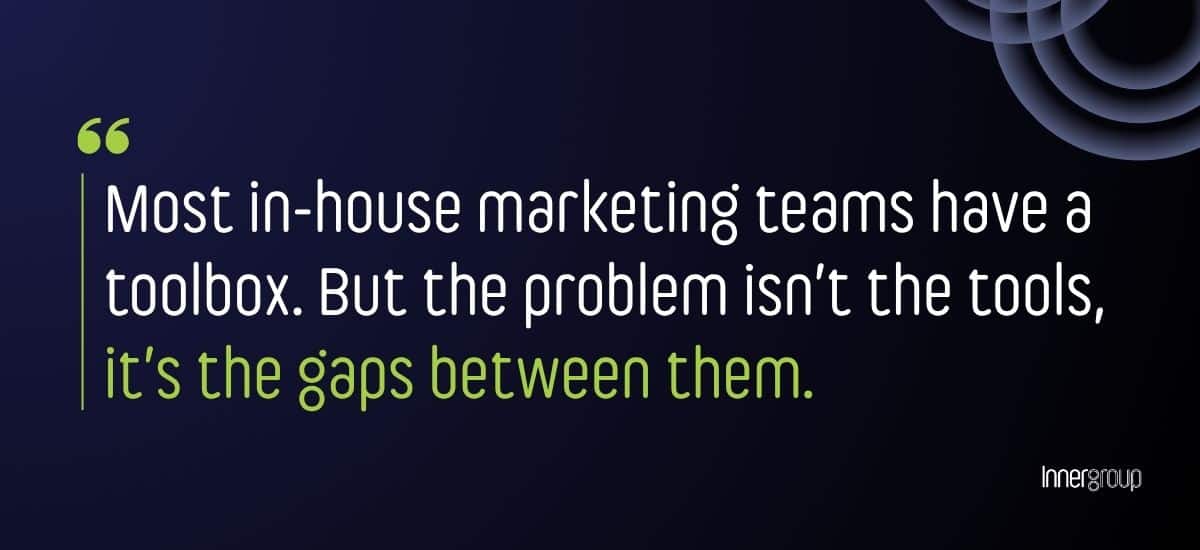
Most in-house marketing teams have a toolbox. Your marketing automation agency has implemented it well enough. But the problem isn’t the tools, it’s the gaps between them. You have subscriptions to every fancy tool there are – Marketo, HubSpot, Asana – you name it.
But here’s what actually happened: Your team is using half of what you paid for.
Workflows exist in silos. When a lead moves from one tool to another, someone manually updates the record. When a campaign ends, reporting requires pulling data from three different dashboards. Integration breaks when you add a new platform. You’re managing the tech stack instead of leveraging it.
Your marketing automation agency optimized your tools. But they didn’t solve the core problem: scattered tools create fragmented work, not unified results.
It’s not that the tools are bad. It’s not that your agency didn’t do their job. It’s that there’s a missing layer—the orchestration, integration, and operational intelligence that turns point solutions into a cohesive system.
Most AI implementation agency excel at marketing workflows. They’re not equipped for systems orchestration, cross-platform integration, AI agents, and operational visibility. That’s a different expertise. And that gap is costing you thousands of hours and significant revenue opportunities.
This guide shows you what’s missing, why it matters, and how to fix it.
By the end, you’ll know exactly what’s holding you back—and how to transform scattered tools into a unified, AI-powered operational system.
What is Operational AI?It’s the intelligent orchestration layer that sits between your tools and your team—AI agents that automate routine work, integrate disconnected systems, and provide real-time visibility into what’s actually working. It’s not just another tool. It’s the nervous system that makes all your tools work together. |
Why Major Tech Stacks Fail (Even When Your Marketing Automation Agency Is Good)
You have a solid AI marketing automation tool. Your agency knows how to use it. So why does it still feel like something’s broken?
Let’s talk about the five critical gaps
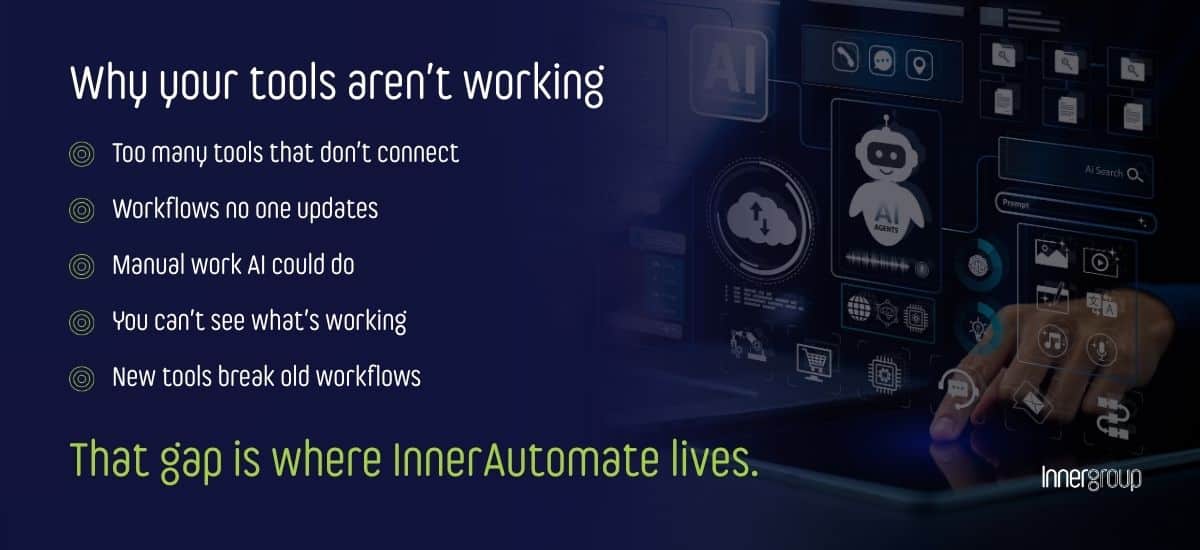
Gap 1: Tool Sprawl Without Orchestration
You don’t have one tool. You have eight.
Marketo or HubSpot for marketing automation. Salesforce for CRM. Monday.com or Jira for project management. Slack for communication. Google Analytics or Looker for data. Asana for planning. Zapier or n8n for “integrations.”
They kind of work together. But they don’t really talk.
Data lives in silos. When a lead moves from Marketo to HubSpot, someone’s manually updating the record. When a campaign ends, reporting requires pulling data from three different dashboards and putting it in a spreadsheet. When you onboard a new team member, they have to learn eight different interfaces.
Your marketing automation agency optimized your Marketo workflows. But they didn’t solve the core problem: these tools operate independently, creating work instead of eliminating it.
Gap 2: Automation That’s “Set and Forget”
Your marketing automation agency set up a nurture workflow 18 months ago. It’s still running.
Nobody’s touched it since.
Here’s the problem: Your business has changed. Your sales process has evolved. Your messaging has shifted. But the workflow is the same.
It’s not broken. But it’s not optimized. It’s running on outdated assumptions about your customer, your sales cycle, your messaging.
That workflow that converts at 15%? It could convert at 25% with optimization. But optimizing requires someone to monitor it, analyze performance, identify bottlenecks, and redesign it. Your marketing automation agency isn’t monitoring it unless you’re paying them ongoing fees (and even then, they’re checking in quarterly, not weekly).
The cost? Missed conversion opportunities, stagnant lead velocity, revenue that could have been captured but wasn’t.
Gap 3: Routine Work That AI Could Automate (But Isn’t)
Your team is manually tagging contacts in HubSpot. Sorting leads into buckets. Creating project briefs. Writing email subject lines. Entering data into spreadsheets. Managing approvals through email.
This is work that operational AI agents could do better, faster, and cheaper than humans. AI work management isn’t a new concept. In fact, it’s the most tried and tested method to include AI into your everyday workflow.
But AI integration requires:
- Understanding where AI can safely replace manual work
- Building or configuring AI agents
- Integrating them with your existing tools
- Setting up quality checks so you don’t trust bad AI output
- Monitoring and improving the AI over time
Your marketing automation agency probably isn’t doing this. They’re experts at marketing, not AI operations. So routine work keeps consuming your team’s time.
Gap 4: No Visibility Into What’s Actually Working
You don’t know if your automation is working. Your success metrics are scattered:
- Lead quality scores live in your CRM
- Conversion rates live in your email platform
- Campaign performance lives in Google Analytics
- Bottlenecks live in your team’s email inbox (they know it takes 2 weeks for approval, but it’s not tracked anywhere)
Your marketing automation agency reports on their tool’s performance. But they can’t tell you the full picture: Is the problem bad lead quality? Slow sales process? Wrong messaging? Broken integration? Or just that your approval workflow is bottlenecking everything?
Without visibility, you can’t optimize. You’re flying blind.
Gap 5: New Tools Break Old Workflows
You realize you need an AI-powered creative production. Or better project management. Or a new analytics platform.
You implement it. It requires integration with your existing systems. The integration is partial, or it breaks something else. Your team has to learn new workflows. The tool sits underutilized.
Meanwhile, your core automation still has all the same problems it did before.
This happens because integrations are fragile. They break when vendors change their APIs.
They’re built for specific point-to-point connections, not for a unified ecosystem. When you add a new tool, you’re not adding to a system—you’re adding another silo.
Why This Happens
It’s not your team’s fault. Your marketing team is expert at marketing. They’re not experts at systems architecture, API integration, workflow orchestration, or AI operations.
Your marketing automation agency is expert at marketing platforms. But systems integration and operational infrastructure is outside their wheelhouse. It’s a different skill set that most agencies don’t develop.
It’s a structural gap. Between the point where you buy tools and the point where they actually work is operational work that most teams can’t handle alone.
That gap is where InnerAutomate lives.
What “Service as Software” Actually Means
The traditional approach to marketing automation is:
- Buy the software
- Hire an agency to set it up
- Run it yourself
- Hope it keeps working
But that’s not how modern operational infrastructure works.
The Three Traditional Approaches (And Why They Fall Short)
Approach 1: Buy the Software, Figure It Out Yourself
You buy Marketo. HubSpot. Monday.com. Slack. Integration tools.
Your team spends 200+ hours implementing and learning.
Reality: 60% of features never get used. Your team is expert at your marketing tools, not at orchestrating them. Integration is fragile. When something breaks, you don’t know who to call.
The problem: Your team is not equipped to build an operational infrastructure.
Approach 2: Hire an Agency to “Set It Up”
An agency comes in, designs workflows, sets up integrations, gets everything humming.
Then they leave.
You’re responsible for maintaining it. When workflows break or drift, you’re on your own. When you want to optimize, you have to hire them again. When you want to add AI, they say “that’s not our specialty.”
The problem: You’re dependent on external resources every time something changes.
Approach 3: Hire a Full-Time Operations Person
You pay $120K-150K/year for someone who lives in your tools and keeps everything running.
They become invaluable. But they’re one person. When they leave, you’ve lost all the knowledge. When you need expertise beyond their skills (AI integration, complex orchestration, advanced automation), you’re stuck. When your business scales, one person can’t keep up.
The problem: Single point of failure and limited scalability.
A Better Way: Service as Software
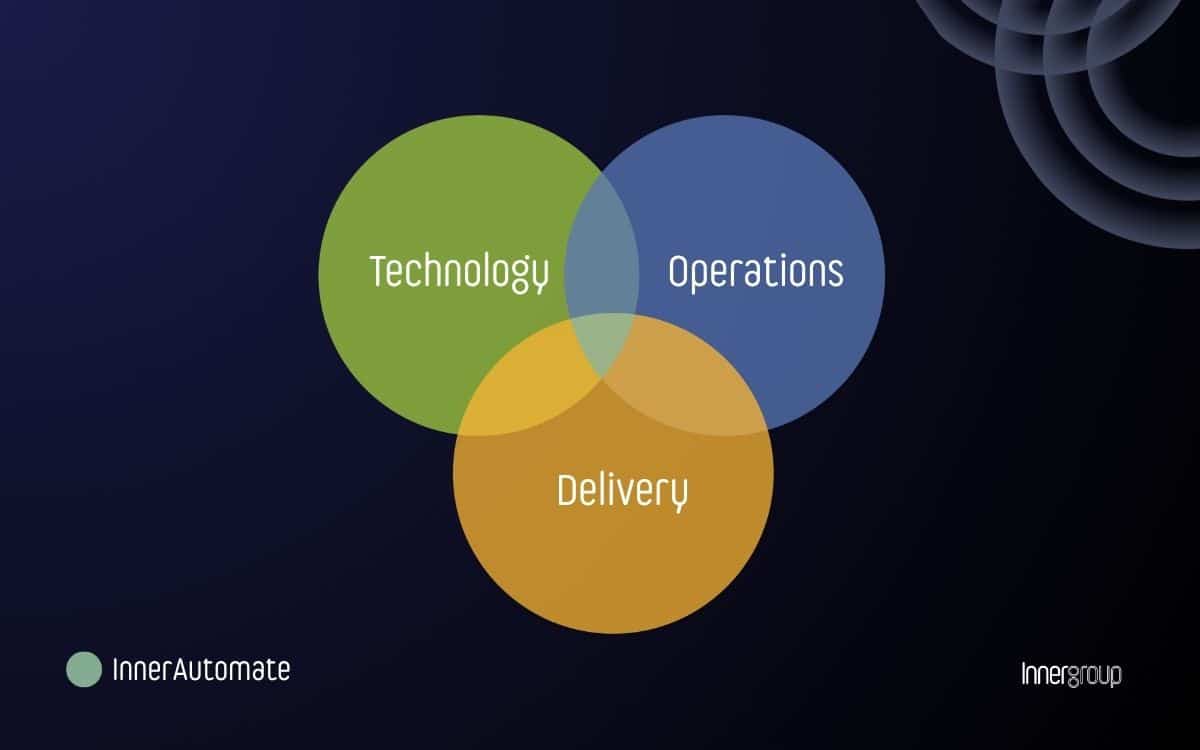
InnerAutomate operates at the intersection of three things:
- Technology + Operational AI
Deep expertise in your tool stack—APIs, integrations, capabilities, limitations. Understanding what’s possible in Marketo vs. HubSpot vs. Monday.com. Knowing how to connect them. Building Operational AI orchestration layers that weren’t there before.
- Operations
Understanding how your team actually works (not how tools assume they should work). Designing workflows that match your reality. Identifying bottlenecks and inefficiencies. Building processes that scale.
- Delivery
Continuously monitoring, measuring, optimizing. Catching problems before they become costly. Proactively recommending improvements. Evolving your system as your business changes.
Instead of “here’s your tool, good luck,” we deliver:
Orchestration Layer
- Unified interface across all your tools
- AI agents handling work between systems
- Intelligent routing and decision-making
- Real-time data synchronization
Operational Intelligence
- Dashboard visibility into what’s working
- Bottleneck identification and alerts
- Performance metrics that matter
- Predictive insights
Continuous Optimization
- Regular workflow reviews (monthly, quarterly)
- Performance tuning based on real data
- New AI agents as opportunities emerge
- Proactive recommendations for improvement
Managed Services
- We maintain your operational infrastructure
- We handle integrations when vendors change
- We troubleshoot when something breaks
- We evolve your system as your business changes
Result: Your tools work for you. Your team focuses on strategy and creativity. You see returns from the software you’ve already invested in.
Marketing operations consulting as a digital transformation engine
Digital transformation for marketing teams isn’t about buying new tools—it’s about fundamentally changing how work flows through your organization. Marketing operations consulting is one of the most underutilized levers for making that transformation real.
Most digital transformation initiatives fail because they focus on the technology, not the operations. You implement a new platform, but your team still works the same way. The workflows haven’t changed. The integration gaps remain. The manual work persists. A year later, you’ve spent hundreds of thousands and adoption is at 40%.
Marketing operations consulting changes this because it addresses the operational foundation that makes technology actually work. It starts by mapping how your team actually works—not how the tools assume they should work. Then it redesigns workflows to eliminate the friction points that slow adoption. Finally, it builds the integrations and automation that make the new way of working seamless.
When done right, marketing operations consulting accelerates digital transformation in four ways. First, it increases adoption by aligning workflows with how your team actually thinks and works. Second, it unlocks technology value you’ve already invested in—features that go unused become part of your daily workflow. Third, it creates the operational infrastructure that makes new technologies work together instead of creating new silos. Fourth, it reduces the risk of transformation by implementing change incrementally, validating results at each stage, and course-correcting based on real data rather than theory.
This is why mature marketing organizations view marketing operations consulting not as a cost, but as the enabler of digital transformation. It’s the bridge between “we bought this tool” and “this tool is now how we work.”
The 7 Problems We Solve (And How)
Problem 1: “We Have Tools But Don’t Know How to Use Them”
What this means:
You’ve invested in marketing automation, but adoption is low. Features exist that could save your team hours, but nobody knows about them. You’re using 30% of what you paid for.
InnerAutomate solution:
- Workflow audit: We analyze how your team actually works (not how the tool assumes they should).
- Adoption assessment: We identify which unused features would deliver the most value.
- Operational AI design: We design how your tools should talk to each other.
- Training redesign: Your team learns through doing, with real workflows that matter.
- Continuous optimization: We monitor adoption and refine based on what’s working.
Problem 2: “Our Automation Isn’t Working, We Need Help”
What this means:
You have workflows in place but results aren’t there. Leads aren’t being scored correctly. Campaigns aren’t converting. You’re not sure if the problem is the workflow design, the data quality, or the tool itself.
InnerAutomate solution:
- Diagnostic audit: We trace every workflow step, check data quality, validate logic
- Root cause analysis: We identify what’s actually broken
- Redesign & rebuild: We fix broken workflows or replace them entirely
- Performance monitoring: We set up dashboards to catch problems early
Problem 3: “Who Can Help Us Optimize Our AI Implementation”
What this means:
You have multiple tools and they kind of work. But you suspect you could be getting more from them. Integration is spotty. Data flows inconsistently between platforms. It feels fragmented.
InnerAutomate solution:
- Stack audit: We map your entire tech ecosystem (tools, integrations, data flows)
- Gap analysis: We identify what’s missing (data, integrations, automation, visibility)
- Orchestration design: We design how your tools should talk to each other
- Implementation: As your AI implementation agency, we build connectors, APIs, middleware to bridge gaps
- Ongoing optimization: We continuously improve based on performance data
Problem 4: “We Need a Tool That Does It All”
What this means:
You’re exhausted managing multiple platforms. You wish there was one tool that handled everything. You’re considering expensive platform consolidation.
InnerAutomate solution:
Instead of rip-and-replace:
- Keep your best tools: Don’t discard what’s working
- Orchestrate them: Make them behave like one unified system through intelligent connectors and AI agents
- Hide the complexity: Your team sees one interface/one workflow, even if 5 tools work behind the scenes
- Add AI layer: We add AI agents that automate the work between tools, making the entire system smarter
Problem 5: “Can AI Help Us Automate to Get More Out of Less”
What this means:
You’ve heard about AI, but you’re not sure how to use it in marketing operations. You want to reduce manual work but don’t know where to start. You’re concerned about AI quality, compliance, or breaking things.
InnerAutomate solution:
- AI opportunity audit: We identify where AI can safely replace manual work (high accuracy, low risk)
- AI agent design: We design and train AI agents for your specific workflows
- Phased rollout: Start with low-risk tasks, validate quality, then scale
- Human oversight: We build in approval workflows, quality checks, and fallback processes
- Continuous learning: AI agents improve over time based on feedback
Problem 6: “I Want to Get My Workflow Audited”
What this means:
You suspect something’s wrong but you’re not sure what. You need a professional assessment. You want to know where to invest first.
InnerAutomate solution:
- Comprehensive workflow audit: We assess every workflow, integration, and automation
- Bottleneck analysis: We identify where your team spends the most time on non-strategic work
- Opportunity scoring: We rank improvements by impact and effort (quick wins first)
- Actionable roadmap: We give you a prioritized list of what to fix, optimize, or build
- ROI calculation: We show you how much time/cost each improvement will save
Problem 7: “We Need Custom Solutions Not Just Tools Setup”
What this means:
You have unique workflows that no off-the-shelf tool handles perfectly. You need something built for your specific business. You don’t want to hire developers but you need custom functionality.
InnerAutomate solution:
- Workflow design: We design custom workflows that match your exact process
- AI agent development: We build custom AI agents for your unique needs
- Integration architecture: We design custom integrations that aren’t available off-the-shelf
- Service layer: We build and maintain it (not just hand it off)
- Continuous evolution: As your business changes, your workflows evolve with it
The InnerAutomate Operational Model
What you get is not just a tool, but a technology partner.
Orchestration Layer
- Unified interface across all your tools
- AI agents handling work between systems
- Intelligent routing and decision-making
- Real-time data synchronization
- Custom integrations for tools that don’t have connectors
Operational Intelligence
- Dashboard visibility into key metrics
- Bottleneck identification and alerts
- Performance metrics that matter
- Predictive insights (this is about to break, here’s why)
- Automated recommendations for improvement
Continuous Optimization
- Regular workflow reviews (monthly, quarterly)
- Performance tuning based on data
- New AI agents as opportunities emerge
- Proactive recommendations for improvement
- Evolution of your system as your business changes
Managed Services
- We maintain your operational infrastructure
- We handle integrations and API updates when vendors change
- We troubleshoot when something breaks
- We evolve your system as your business changes
- You have a dedicated team, not a help desk
Strategic Consulting
- Guidance on tool selection when you need new ones
- Workflow redesign when business processes change
- AI opportunity identification
- Roadmap planning for operational evolution
- Executive visibility into what’s working and what’s not
When InnerAutomate Is the Right Fit For Marketing Automation Implementation
Your in-house agency is a good fit for InnerAutomate if:
- You have 3+ marketing tools and they don’t talk to each other seamlessly
- You have automation in place but you think it could be optimized
- Your team spends time on routine work that feels like it should be automated
- You’re considering a new platform to consolidate everything (we offer a better alternative)
- You want to add AI but don’t know where to start
- You have unique workflows that off-the-shelf tools don’t handle
- You want operational visibility into what’s actually working
- You’re tired of managing vendors and want one partner to orchestrate it all
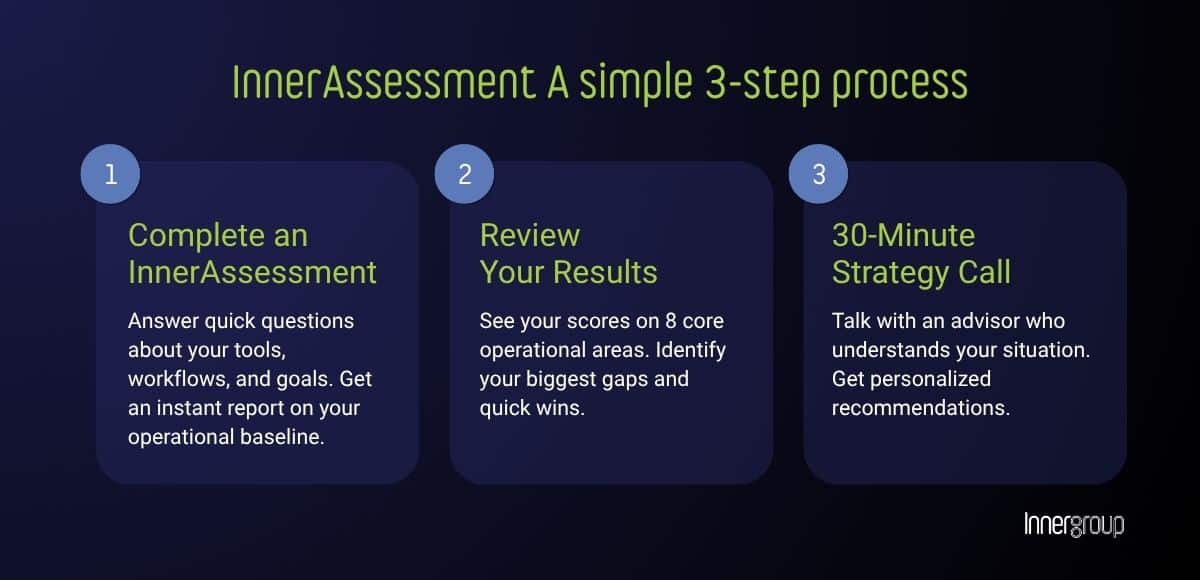
Ready to Get Started On Your Marketing Automation Journey with InnerAutomate?
The first step is to fill your personalized 7-minutes InnerAssessment. Answer targeted questions about your current tools, workflows, pain points, and goals. This gives us a clear picture of your operational baseline. You’ll get a tailored report including your scores on 8 core operational areas.
Followed by the InnerAssessment, you can book a 30-minute call with our advisory who will walk you through your results, identify your top pain points, discuss quick wins and strategic improvements, and give you a preliminary service estimate.
No pressure. This is a diagnostic conversation. We’re here to help you understand what’s possible, not push you into anything.